

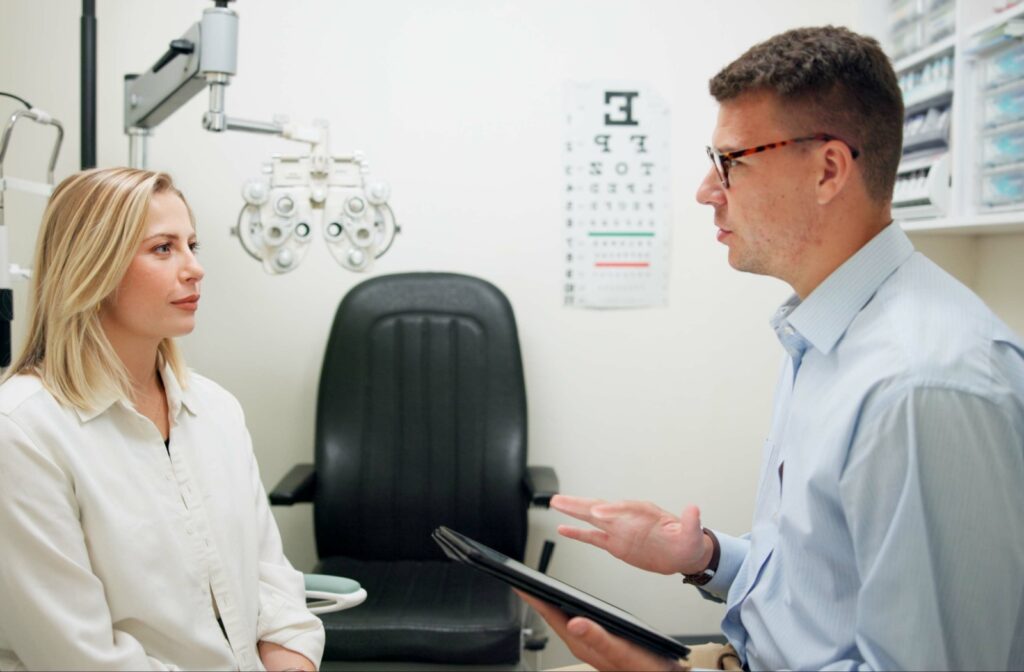
As an eye doctor, one of the most common questions I hear is about how often someone should have their eyes checked. It’s a great question because your family’s vision needs can change as you grow and age. Regular eye exams are about more than just clear sight; they are a window into your overall health, which is why our practice is committed to providing thorough and personalized care.
The recommended frequency for eye exams depends on your age, risk factors, and overall health, but everyone can benefit from routine check-ups. These visits help track changes in your vision and monitor the health of your eyes over time. We can work together to figure out a schedule that fits you and your family.
Recommended Eye Exam Frequency for Your Family
Your family’s eye care needs evolve through different stages of life. General guidelines can help you plan when everyone, from your youngest child to yourself, should see an eye doctor. Following a consistent schedule helps maintain good eye health for years to come.
For Children and Teenagers
Clear vision is closely linked to your child’s development and success in school. We recommend a pediatric eye exam before your child starts kindergarten to identify any potential issues early on. After that, exams every one to two years are a good way to support their learning and growth.
For Adults Under 40
If you’re an adult without any vision symptoms or specific risk factors, a routine adult eye exam every year is good practice. This schedule helps confirm your prescription is up to date and allows us to keep a baseline of your eye health. It’s a simple step to keep your vision clear and comfortable.
For Adults Over 40
As you move into your 40s and beyond, your risk for certain age-related eye conditions can increase. You might start to notice changes in your near vision, for example, a common condition known as presbyopia. We often recommend yearly visits, with more frequent exams if our eye doctor recommends it, to monitor for these natural changes.
Why Regular Visits to an Eye Doctor Matter
An eye exam does much more than just check if you need glasses. It’s a key part of your overall health routine that offers several benefits. Regular visits with an optometrist can help you protect your vision and stay informed about your health.
Check Your Vision Prescription
If you wear glasses or contact lenses, your eyesight can shift over time. A regular exam confirms that your prescription is current so that you can see the world around you clearly and comfortably. This helps reduce issues like eye strain and headaches that can arise from an outdated prescription.
Monitor Your Overall Eye Health
During an exam, your doctor looks at the complete structure of your eye. We examine everything from the cornea on the front to the optic nerve in the back. This allows us to spot any subtle changes since your last visit.
Detect Health Issues Early
Your eyes can sometimes reveal early signs of other health conditions, such as high blood pressure or diabetes. In fact, an eye exam can detect over 270 systemic diseases, sometimes before you notice other symptoms. This allows for prompt attention and care with your primary physician.
Signs You Might Need an Eye Exam Sooner
Sometimes, you shouldn’t wait for your next scheduled appointment. If you or a family member notices any new or sudden changes in vision, it’s a good idea to schedule a visit. Pay attention to symptoms that appear unexpectedly, including:
- Frequent headaches
- Blurry or double vision
- Difficulty with night vision
- Eye strain or fatigue
- Squinting to see clearly
- Seeing flashes of light or new floaters, which could require emergency eye care
What to Expect During Your Appointment
A comprehensive eye exam is a straightforward and comfortable process. It involves a series of tests to evaluate your vision and the health of your eyes. Knowing what happens during your visit can help you feel prepared and at ease.
Reviewing Your Health History
Your visit will start with a conversation about your personal and family health history. We’ll also discuss any medications you take and listen to any vision concerns you may have. This information helps us get a complete picture of your health.
Preliminary Eye Function Tests
Next, a technician will guide you through several tests to gather important data. These may include measurements of your side vision, eye pressure to check for glaucoma, and how your pupils react to light. These initial steps provide valuable information for the doctor.
The Exam with The Doctor
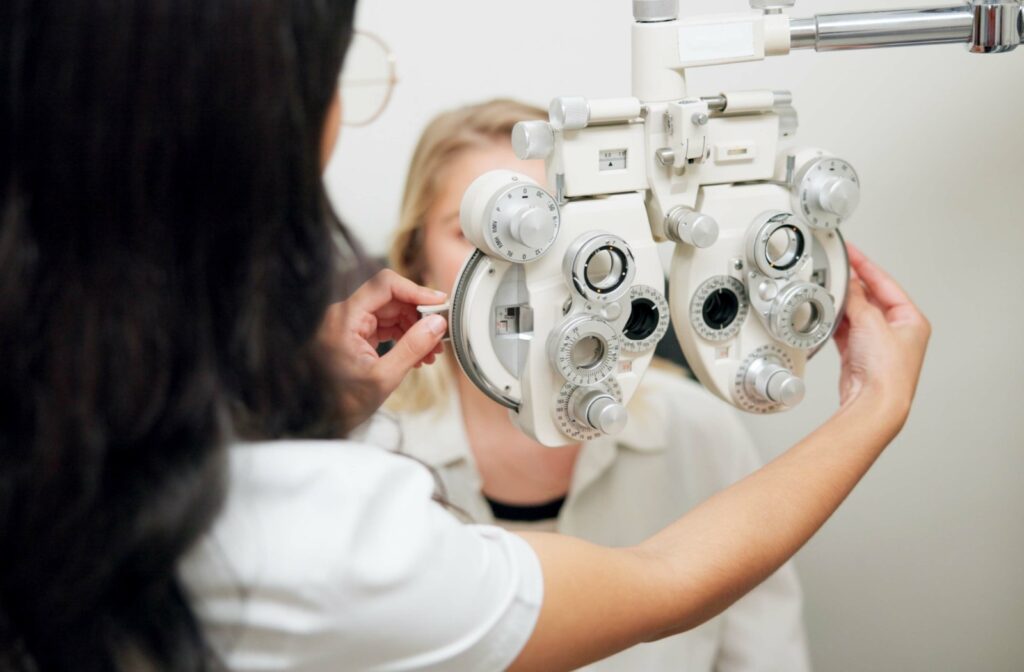
Your eye doctor will then perform a refraction to determine your precise prescription. This is the classic “which is better, one or two?” test. We’ll also use a slit lamp, a specialized microscope that allows us to examine the various structures of your eye closely. This gives us a detailed view of your eye health.
Contact Lens Exams
If you wear or are interested in wearing contacts, you’ll need a specific contact lens exam. This includes extra measurements of your eye’s surface to find lenses that fit correctly and feel comfortable. We also check to help ensure your eyes stay healthy with contact lens wear.
How Long Do Eye Exams and Prescriptions Last?
It’s helpful to know what to plan for, both for the appointment itself and for how long your new prescription is valid. This information can help you schedule your time and budget for your eye care needs. Here are a few common questions we hear.
The Time for an Exam
A routine exam typically takes about 30 to 60 minutes. If you need specialized tests or are getting fitted for contact lenses for the first time, it might take a bit longer. We take the time necessary to be thorough and answer all your questions.
Pupil Dilation and Your Vision
Sometimes, we need a better look at the back of your eye and may perform a dilated eye exam to widen your pupils. This can cause your vision to become blurry and sensitive to light for a few hours afterward. It’s a good idea to bring sunglasses and arrange for a ride home if you have your pupils dilated.
How Long Is Your Prescription Valid
A prescription for glasses or contact lenses is typically valid for one to two years. This standard is in place to encourage regular eye health check-ups. It helps ensure we can re-evaluate your eyes before you order new contact lenses with an outdated prescription.
Schedule a Visit with Your Eye Doctor
Keeping up with your family’s eye health is a simple but important part of your overall wellness. At Pine Creek Vision Clinic, we’re here to help you with your vision needs. If it’s time for a check-up, your eye doctor can provide a comprehensive exam for you and your loved ones. Contact us to schedule your next eye exam today.